
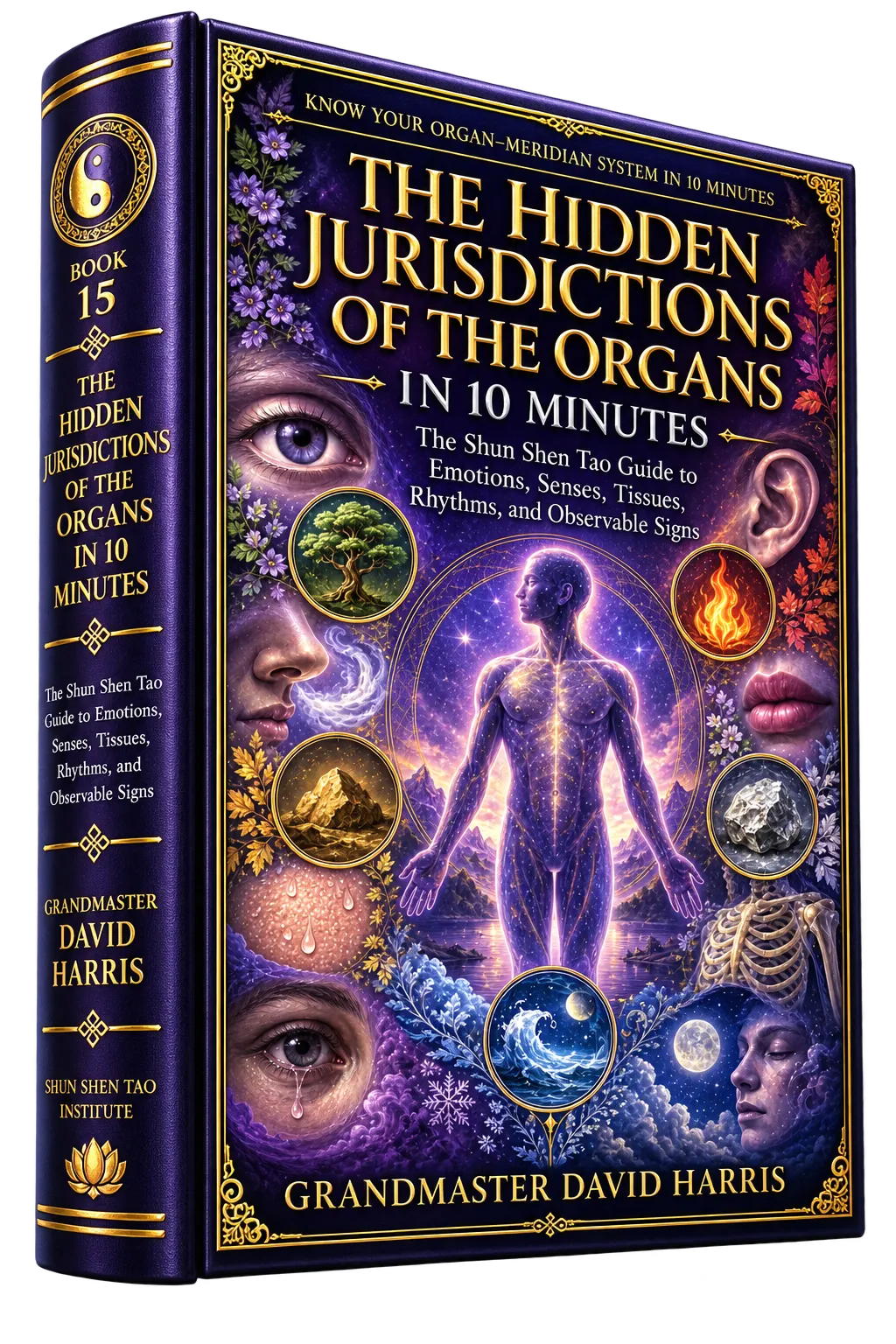
Know your organ-meridian system in 10 minutes
The Hidden Jurisdictions of the Organs in 10 Minutes
Discover the deeper relationships connecting emotions, senses, tissues, seasons, rhythms, behaviors, and observable signs to the traditional organ-meridian systems.
$9.95

About This Book
Traditional organ-meridian theory reaches far beyond the organs themselves. Each system belongs to a wider functional network that may be reflected through emotions, senses, tissues, rhythms, environmental influences, movement, voice, posture, and other observable clues.
The Hidden Jurisdictions of the Organs in 10 Minutes explores these less obvious connections and shows how they can become part of a larger pattern.
Rather than attaching one organ label to a single experience, you’ll learn to observe clusters, relationships, timing, and context—building a clearer picture of how different systems may support, compensate for, or influence one another.

About This Book
Traditional organ-meridian theory reaches far beyond the organs themselves. Each system belongs to a wider functional network that may be reflected through emotions, senses, tissues, rhythms, environmental influences, movement, voice, posture, and other observable clues.
The Hidden Jurisdictions of the Organs in 10 Minutes explores these less obvious connections and shows how they can become part of a larger pattern.
Rather than attaching one organ label to a single experience, you’ll learn to observe clusters, relationships, timing, and context—building a clearer picture of how different systems may support, compensate for, or influence one another.
Inside This Book You'll Discover
The deeper meaning of organ-meridian jurisdictions
Emotional and behavioral relationships across the organ systems
Connections involving senses, tissues, fluids, and body openings
Seasonal, climatic, timing, and environmental influences
How voice, posture, movement, color, and observable signs provide clues
How the Five Elements organize broader families of correspondence
Primary, supporting, compensating, and aggravating system relationships
A practical method for comparing clues without one-organ conclusions
Who This Book Is For
This book is for anyone ready to look beyond basic organ functions and explore the less obvious relationships within traditional organ-meridian theory.
Beginners expanding their understanding of organ-meridian theory
Wellness-minded readers developing deeper body awareness
Martial artists exploring whole-person relationships
Bodyworkers and coaches seeking a broader observation framework
Energy-work practitioners studying subtle pattern relationships
Experienced students wanting a deeper cross-system reference
Why Readers Love This Book
Some of the most interesting traditional organ relationships are easy to overlook. An emotion, change in voice, sensory pattern, posture, time of day, or environmental response may seem unrelated until it is viewed as part of a larger functional network.
This book brings those hidden jurisdictions together and shows readers how to organize observations into meaningful categories before looking for convergence across several clues.
The emphasis remains on the whole picture. Instead of assuming that one observation proves one imbalance, readers learn to compare alternatives and explore how systems may support, restrain, drain, compensate for, or disturb one another.
Product Details
Title: The Hidden Jurisdictions of the Organs in 10 Minutes
Author: Grandmaster David Harris
Series: Know Your Organ-Merdian System in 10 Minutes
Book: 16 of 17
Format: Digital eBook (PDF)
Publisher: Shun Shen Tao Institute
Educational Disclaimer
This book presents traditional wellness education and Shun Shen Tao Theory. Traditional organ-meridian systems are functional networks and are broader than the anatomical organs recognized by modern medicine. The material is intended to help readers observe relationships and patterns, not to diagnose, treat, cure, or prevent disease or replace qualified medical care. A symptom, emotion, facial sign, dream, time pattern, or sensory change may have many possible explanations, and no single observation proves that one organ-meridian system is imbalanced.
Instant Digital Download
Get access to the digital edition and explore the hidden relationships of the organ-meridian systems at your own pace. Learn to recognize connections among emotions, senses, tissues, seasons, rhythms, behaviors, and observable signs while developing a more complete view of the body's traditional functional network.
Ready to Discover the Hidden Jurisdictions of the Organs?
Go beyond the obvious and explore how emotions, senses, tissues, rhythms, environment, behavior, and subtle observable clues can connect within the larger organ-meridian map.