
Eat for Your Pattern
Explore the Shun Shen Tao Food Pattern Library and discover practical food guidance for identifying digestive patterns, understanding how meals affect your response, and choosing a food direction that fits your individual pattern.
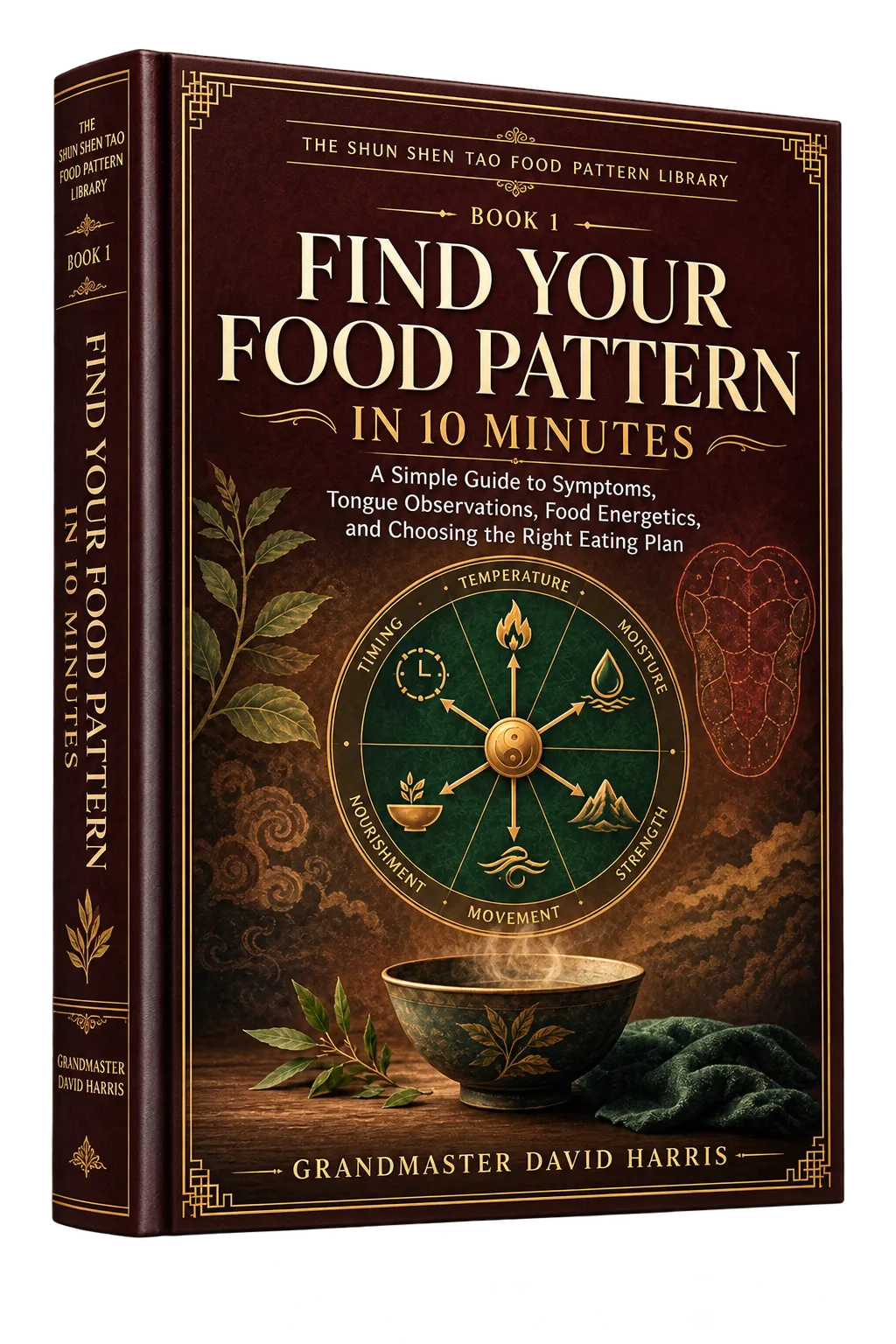
Find Your Food Pattern in 10 Minutes
Discover a practical starting point for understanding your individual food pattern. Find Your Food Pattern in 10 Minutes helps you compare key signs, food responses, temperature tendencies, digestion, energy, and other clues so you can identify your primary pattern and choose the most appropriate direction within the Shun Shen Tao Food Pattern Library.
Cold and Weak Digestion in 10 Minutes
Explore a traditional food pattern centered on cold or raw food sensitivity, digestive chill, bloating, loose stool, fatigue, and a preference for warmth. This guide helps readers understand when warm, cooked meals and easier-to-digest preparation may provide a more suitable direction for supporting weak or cold digestion.
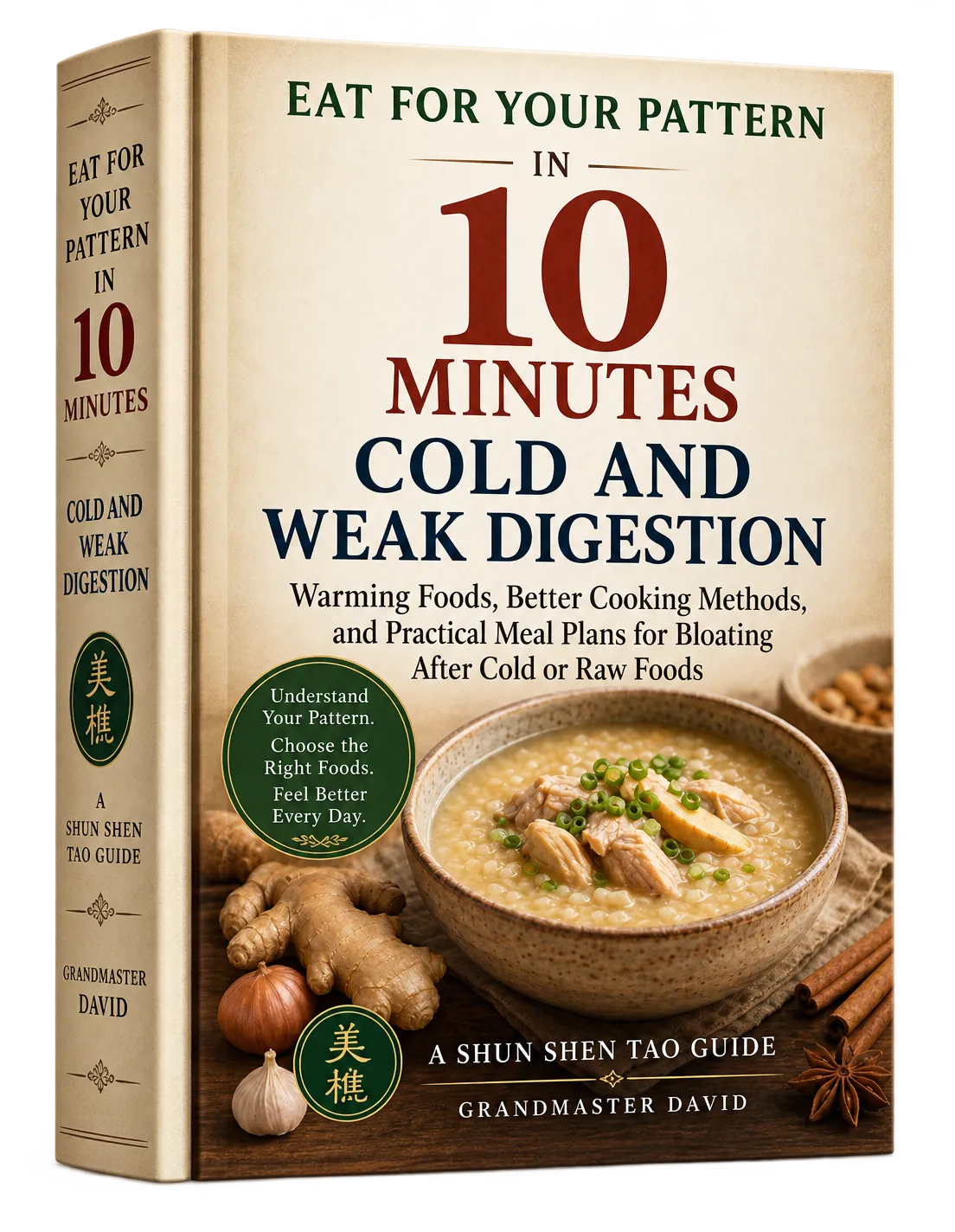
Cold and Weak Digestion in 10 Minutes
Explore a traditional food pattern centered on cold or raw food sensitivity, digestive chill, bloating, loose stool, fatigue, and a preference for warmth. This guide helps readers understand when warm, cooked meals and easier-to-digest preparation may provide a more suitable direction for supporting weak or cold digestion.
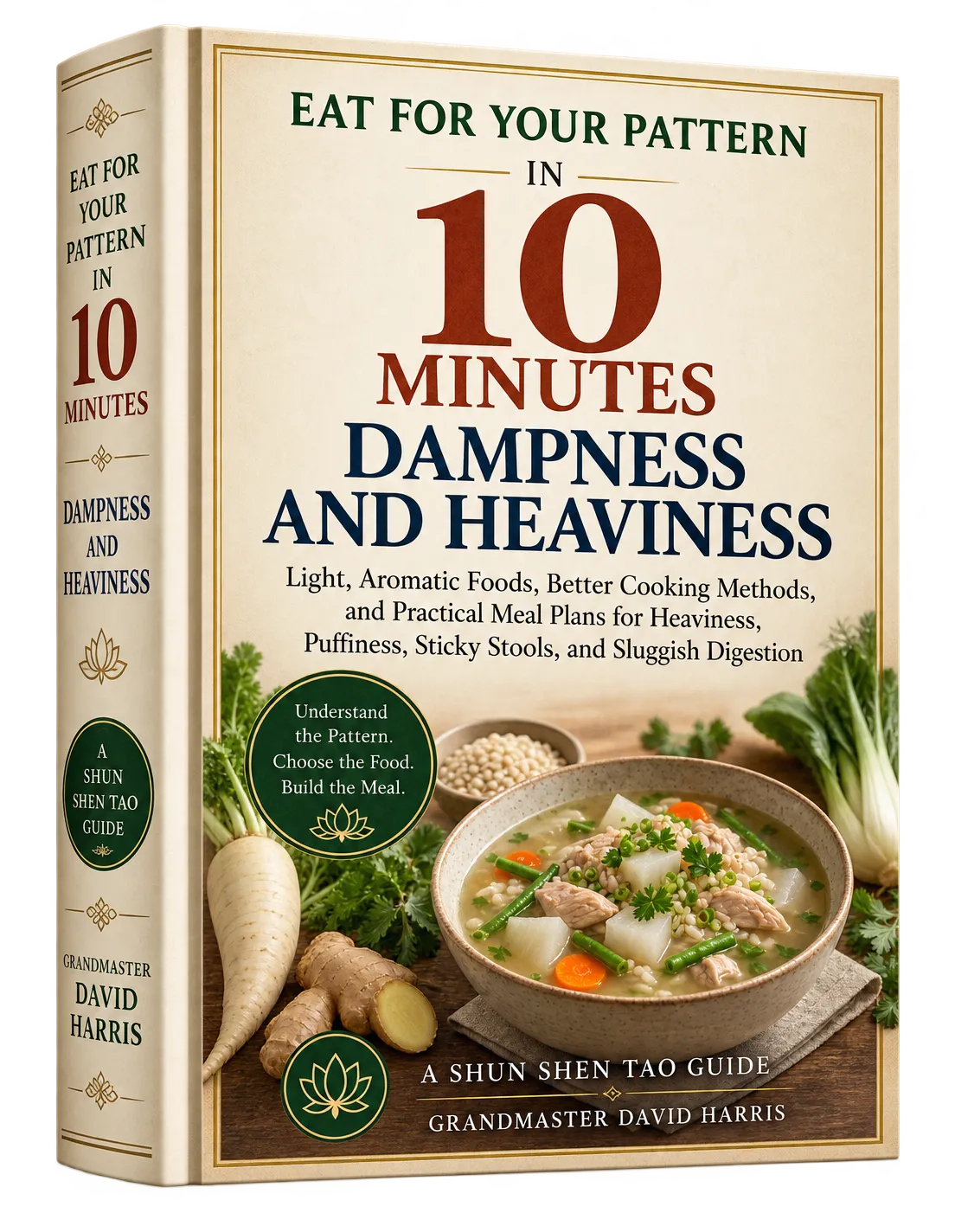
Dampness and Heaviness in 10 Minutes
Learn about the traditional Dampness pattern and its connection with heaviness, puffiness, stickiness, sluggishness, and difficult food transformation. This guide explores how lighter preparation, moderate portions, and reduced richness can help create meals that support movement and nourishment without relying on overly dry or restrictive eating.
Food Stagnation and Overloaded Digestion in 10 Minutes
Discover how meal size, richness, speed, late eating, and meal stacking can contribute to retained fullness, pressure, belching, sourness, and reduced appetite. This guide focuses on reducing digestive burden through simpler combinations, moderate portions, gentler movement, and enough time for comfortable appetite to return.
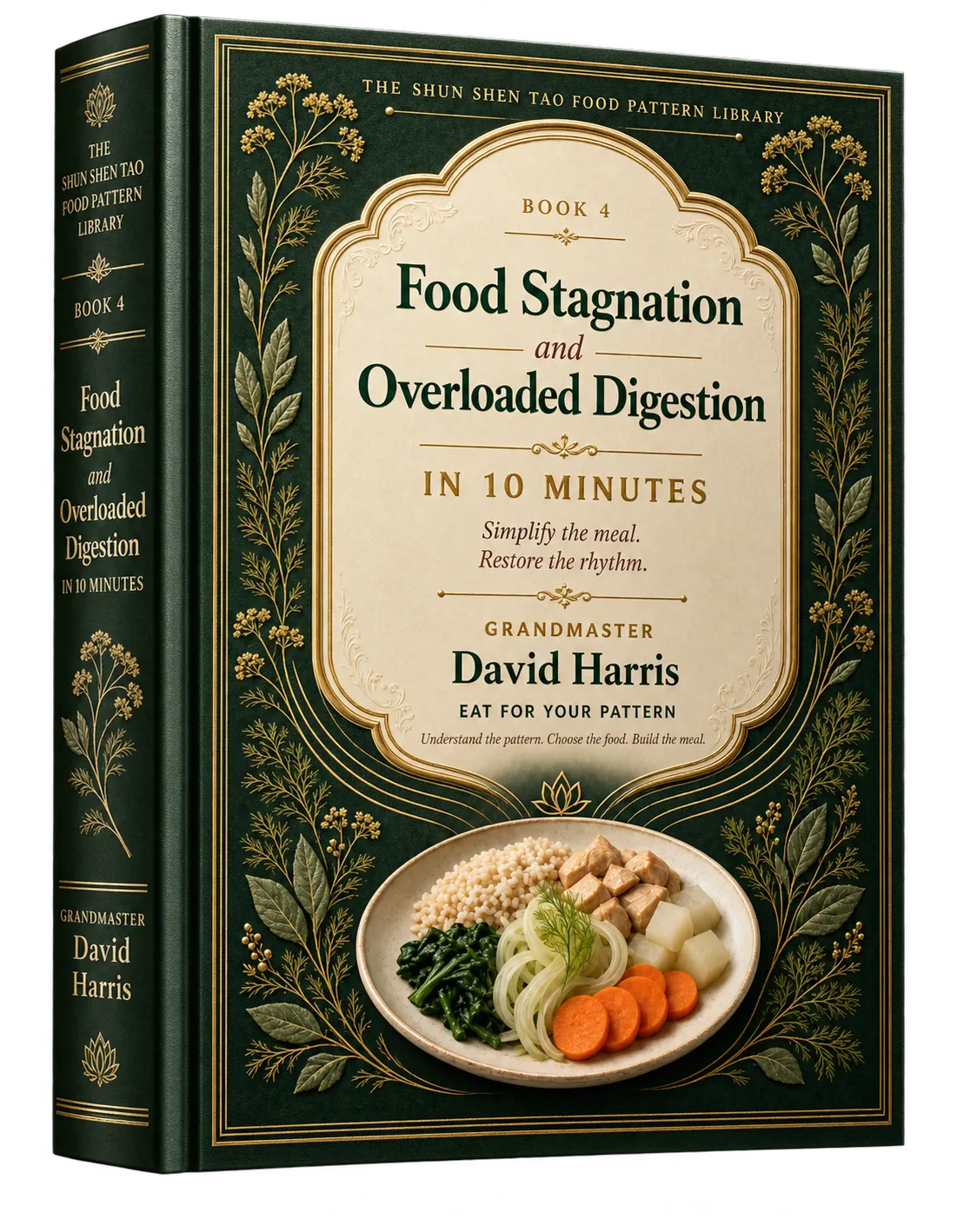
Food Stagnation and Overloaded Digestion in 10 Minutes
Discover how meal size, richness, speed, late eating, and meal stacking can contribute to retained fullness, pressure, belching, sourness, and reduced appetite. This guide focuses on reducing digestive burden through simpler combinations, moderate portions, gentler movement, and enough time for comfortable appetite to return.
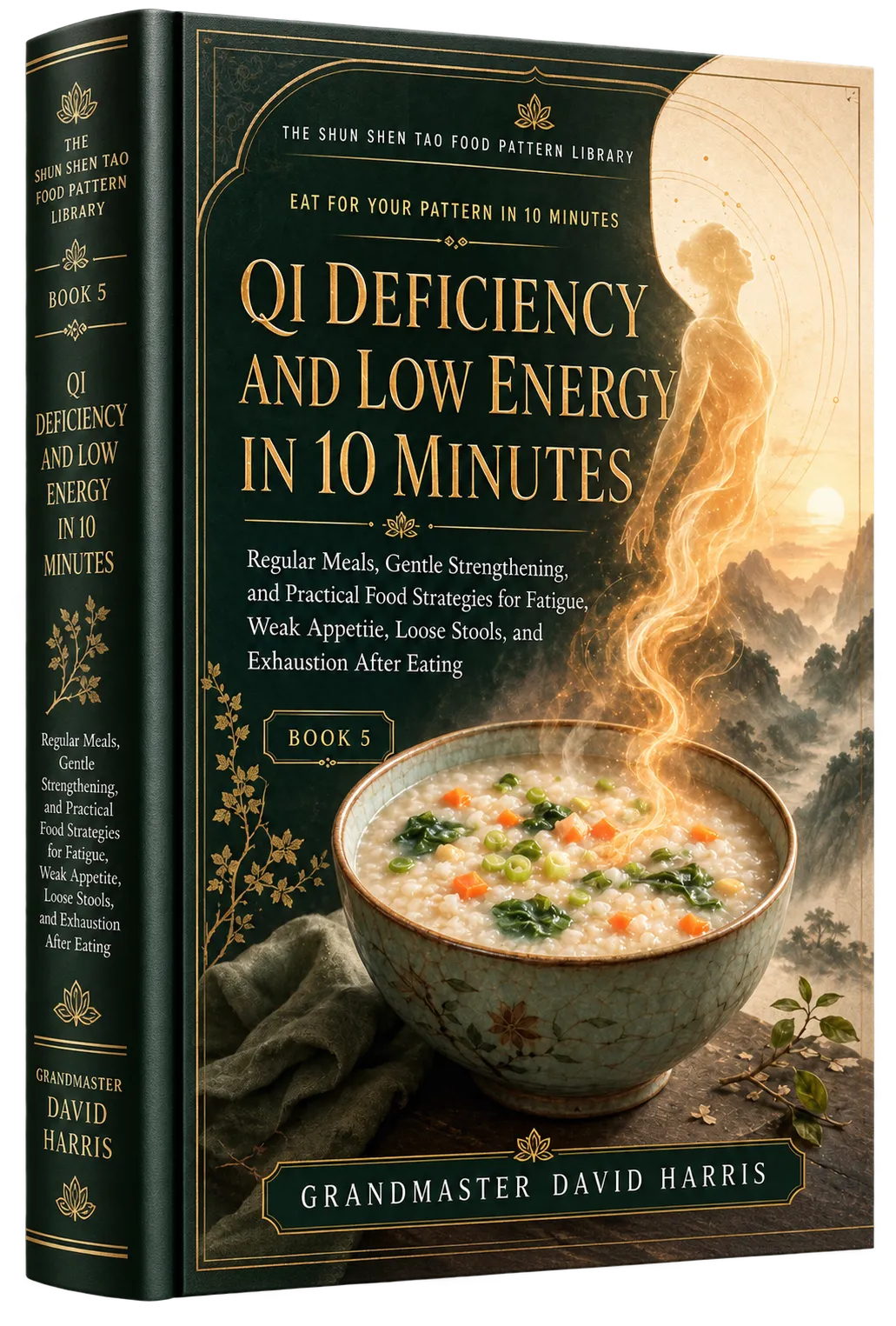
Qi Deficiency and Low Energy in 10 Minutes
Explore a traditional pattern characterized by low digestive capacity, weak appetite, fatigue after meals, soft or loose stools, and slow recovery. This guide focuses on regular, cooked nourishment designed to support digestive strength without overwhelming a system that may already have difficulty receiving and transforming ordinary meals.
Yang Deficiency and Deep Cold in 10 Minutes
Discover a deeper Cold pattern associated with persistent coldness, low vitality, cold limbs, and watery or weak tendencies. This guide explores gradual, sustaining warmth and nourishing cooked meals while showing why stronger stimulation is not necessarily better when the underlying pattern reflects deeper weakness.
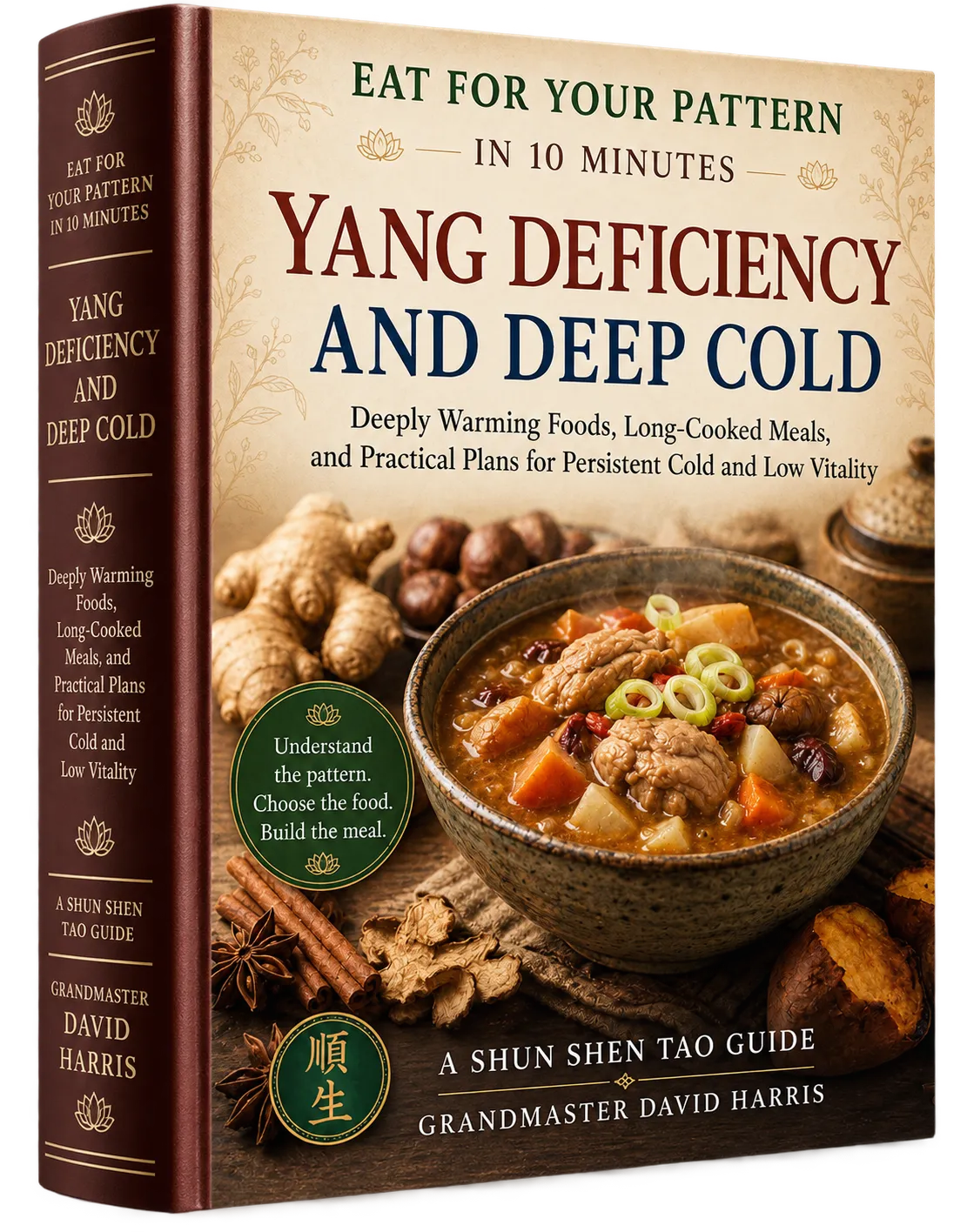
Yang Deficiency and Deep Cold in 10 Minutes
Discover a deeper Cold pattern associated with persistent coldness, low vitality, cold limbs, and watery or weak tendencies. This guide explores gradual, sustaining warmth and nourishing cooked meals while showing why stronger stimulation is not necessarily better when the underlying pattern reflects deeper weakness.
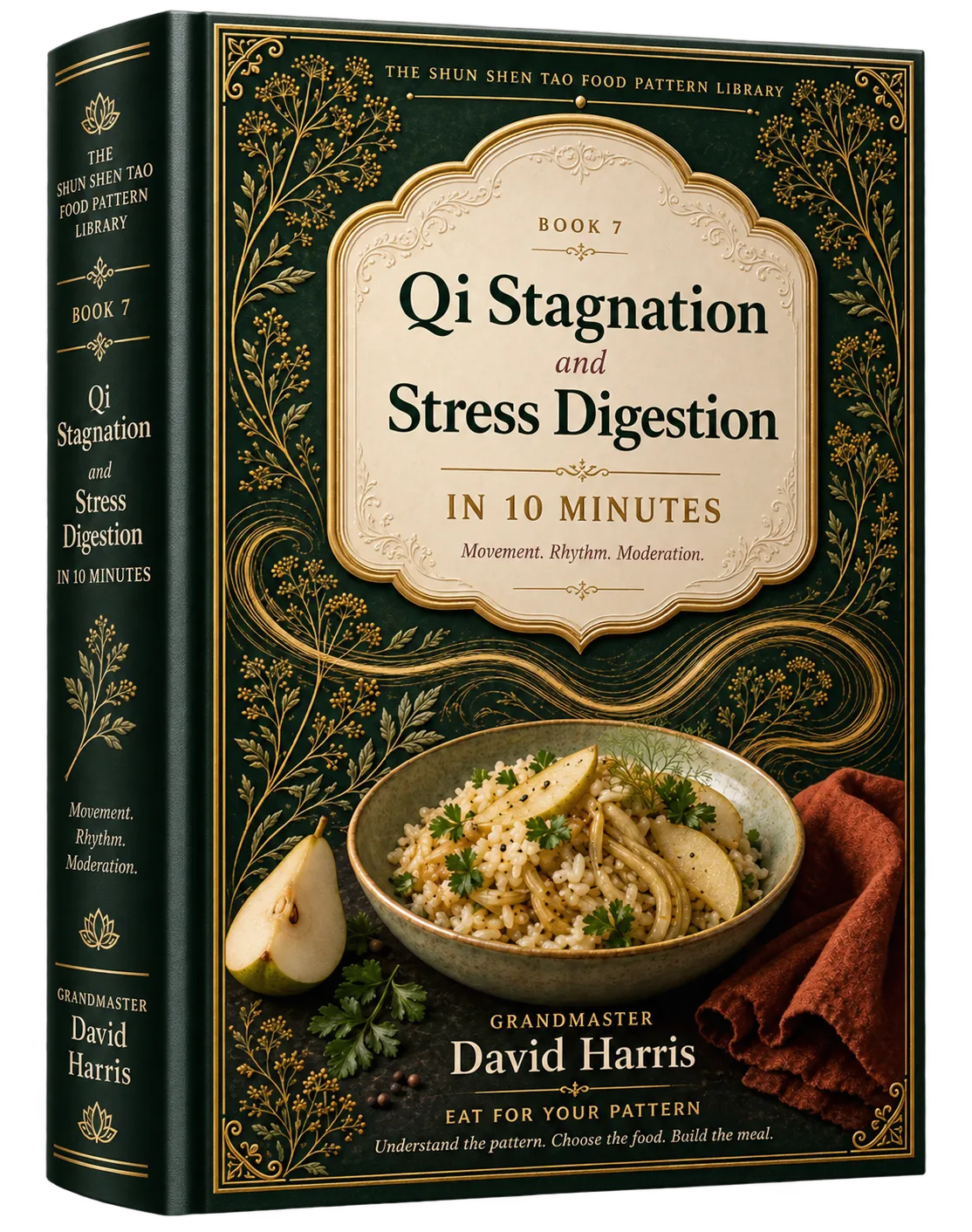
Qi Stagnation and Stress Digestion in 10 Minutes
Explore how stress, tension, rushing, and disrupted meal timing can influence appetite and digestion. This guide examines stress-reactive bloating, tightness, belching, irregular appetite, and changing bowel rhythm while introducing regular meals, moderate portions, aromatic foods, and gentle movement as practical food-pattern strategies.
Heat and Stomach Irritation in 10 Minutes
Learn about a traditional digestive Heat pattern associated with burning, thirst, irritation, redness, and other hot digestive signs. This guide explores how food temperature, preparation, richness, spice, and individual response can help readers create a more cooling or non-irritating food direction without making unnecessary dietary extremes.
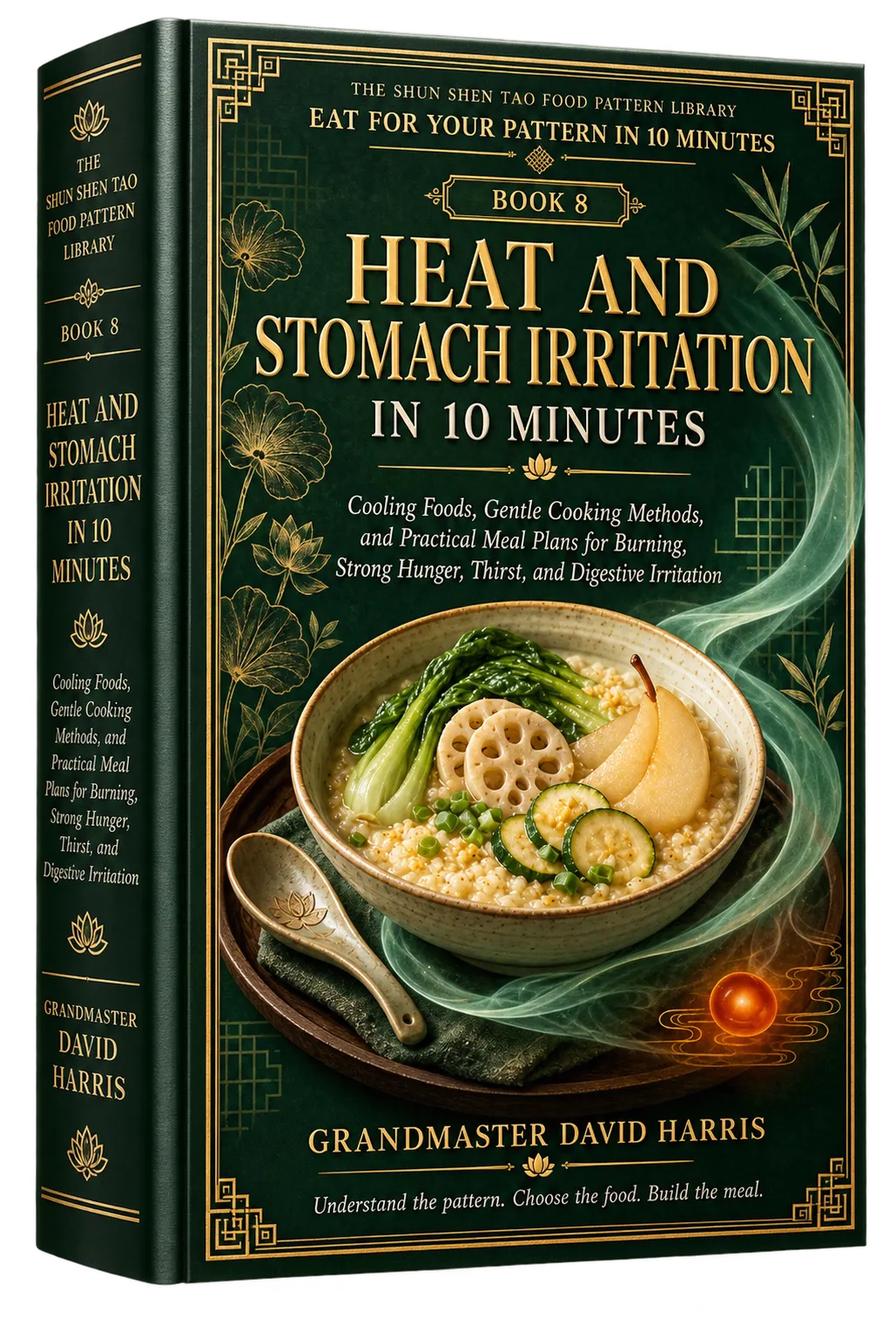
Heat and Stomach Irritation in 10 Minutes
Learn about a traditional digestive Heat pattern associated with burning, thirst, irritation, redness, and other hot digestive signs. This guide explores how food temperature, preparation, richness, spice, and individual response can help readers create a more cooling or non-irritating food direction without making unnecessary dietary extremes.
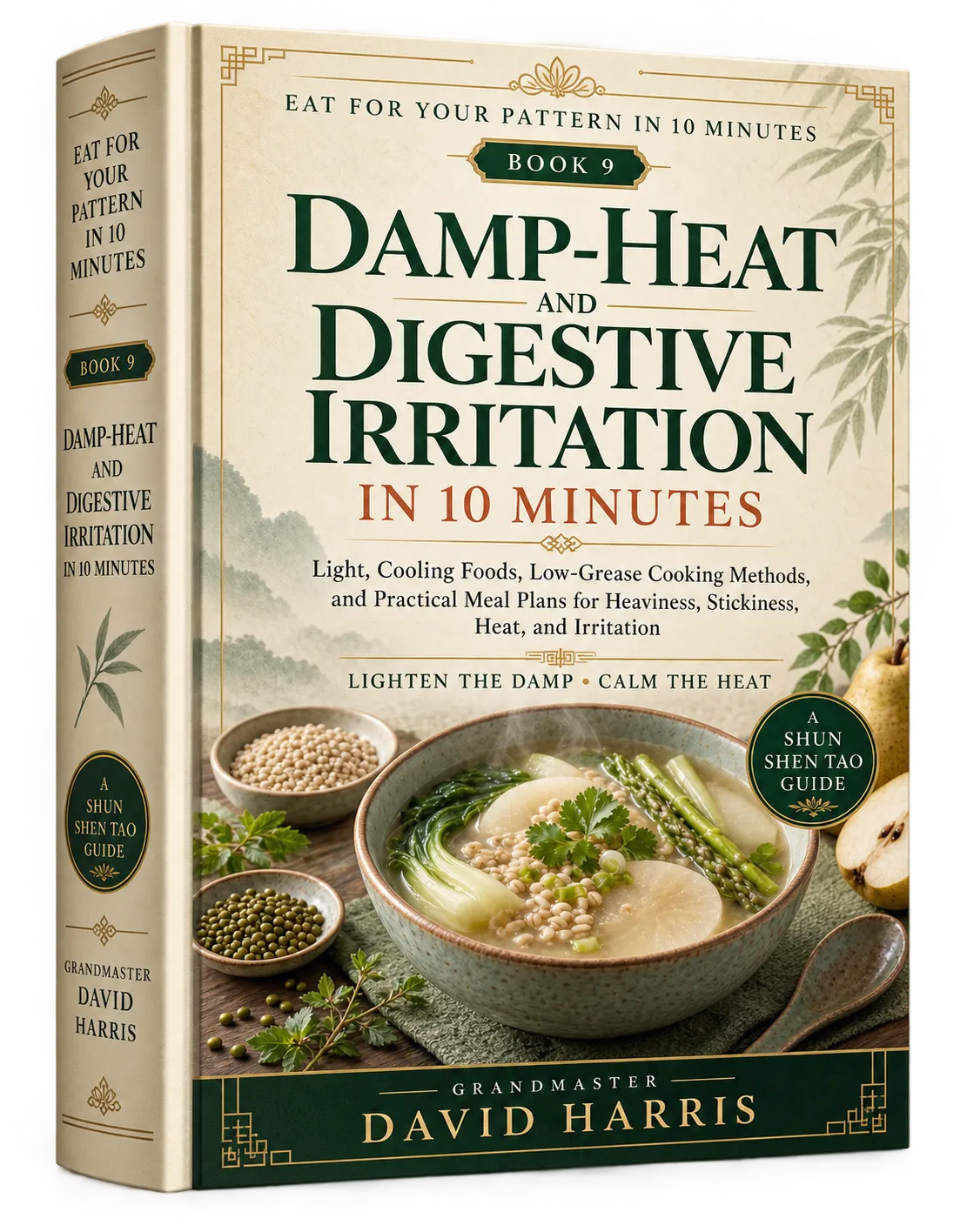
Damp-Heat and Digestive Irritation in 10 Minutes
Explore a pattern in which Heat and Dampness appear together, creating a combination of heaviness, stickiness, grease, irritation, urgency, or odor. This guide focuses on lighter, cooked, cool-neutral meals with controlled richness while helping readers balance the need to calm Heat without creating excessive Cold.
Phlegm and Congestion in 10 Minutes
Discover the traditional Phlegm pattern, where Dampness becomes more condensed and obstructive. This guide explores mucus, thick congestion, chest fullness, heaviness, and cloudy or obstructed sensations while helping readers reconsider cloying foods and build meals around a clearer, lighter food direction suited to the underlying pattern.
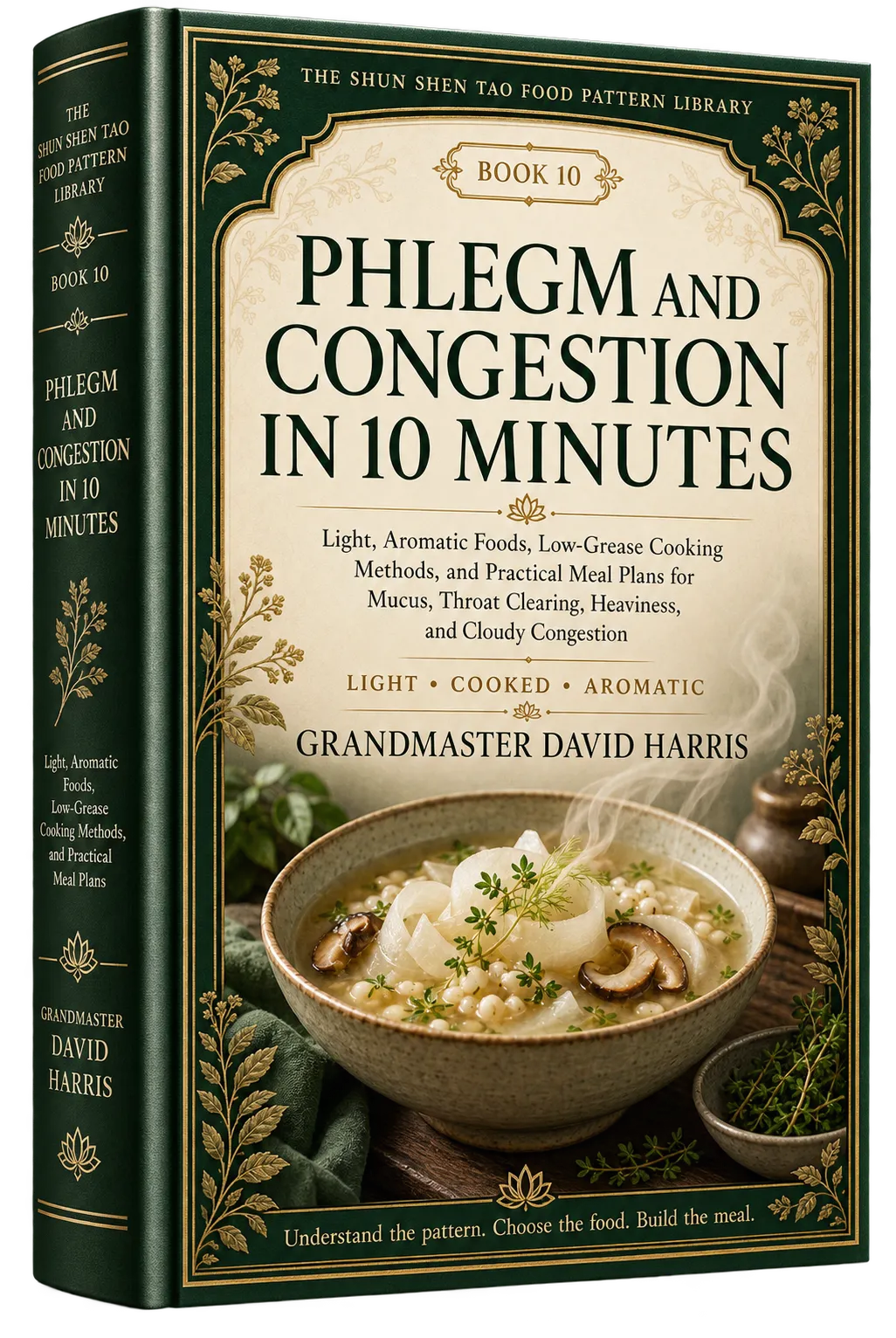
Phlegm and Congestion in 10 Minutes
Discover the traditional Phlegm pattern, where Dampness becomes more condensed and obstructive. This guide explores mucus, thick congestion, chest fullness, heaviness, and cloudy or obstructed sensations while helping readers reconsider cloying foods and build meals around a clearer, lighter food direction suited to the underlying pattern.
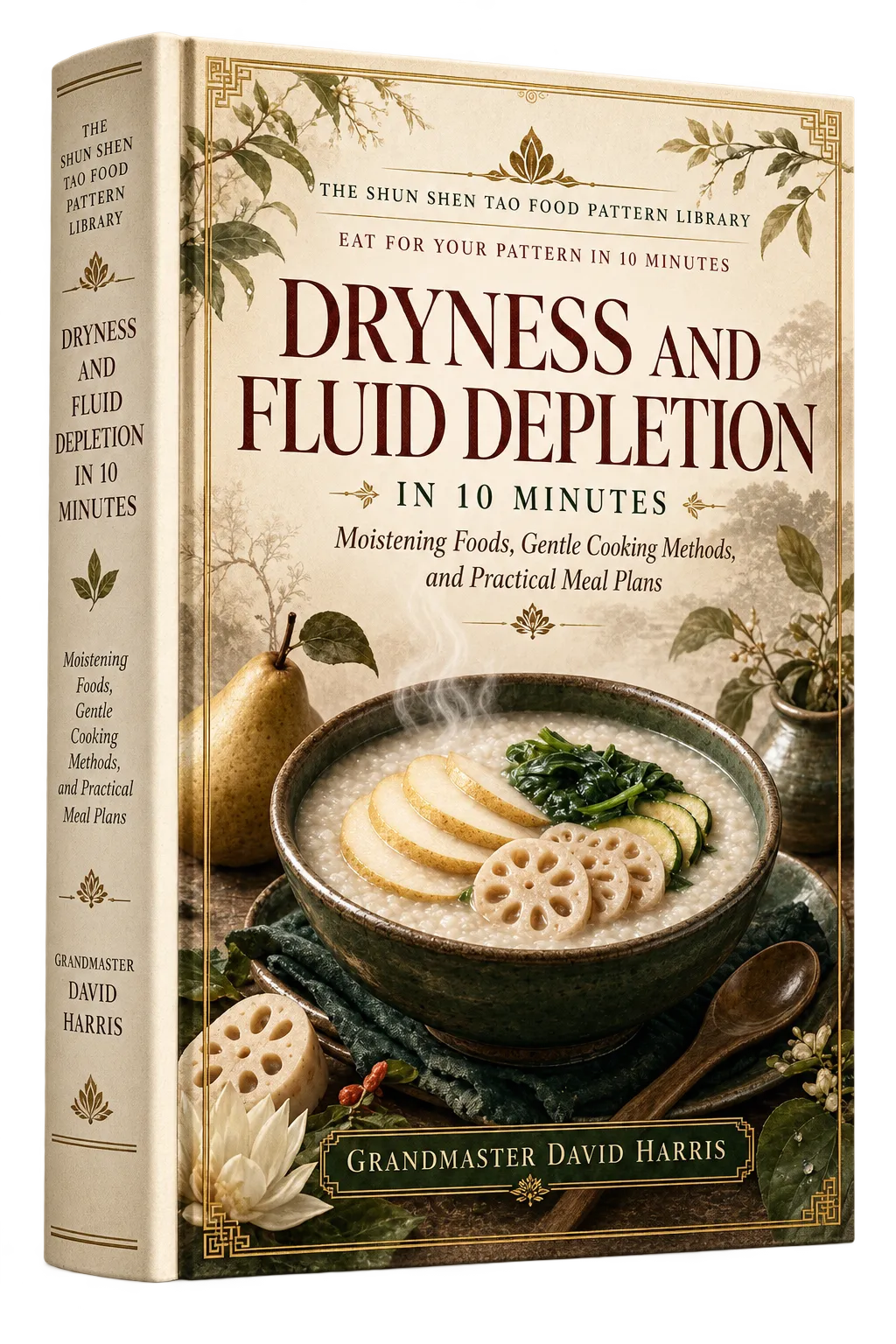
Dryness and Fluid Depletion in 10 Minutes
Explore a food pattern centered on insufficient moisture and fluids, including dry mouth, throat, skin, or stools. This guide introduces moist cooking methods and practical meal adjustments designed to protect fluids and nourishment while helping readers distinguish straightforward Dryness from other depleted patterns that may require a different food direction.
Blood Deficiency and Poor Nourishment in 10 Minutes
Discover a traditional pattern centered on building and nourishment. This guide explores signs such as paleness, dizziness tendency, dryness, poor recovery, and under-nourishment while emphasizing complete, digestible, repeatable meals that build consistently without becoming excessively rich, heavy, or difficult to receive.
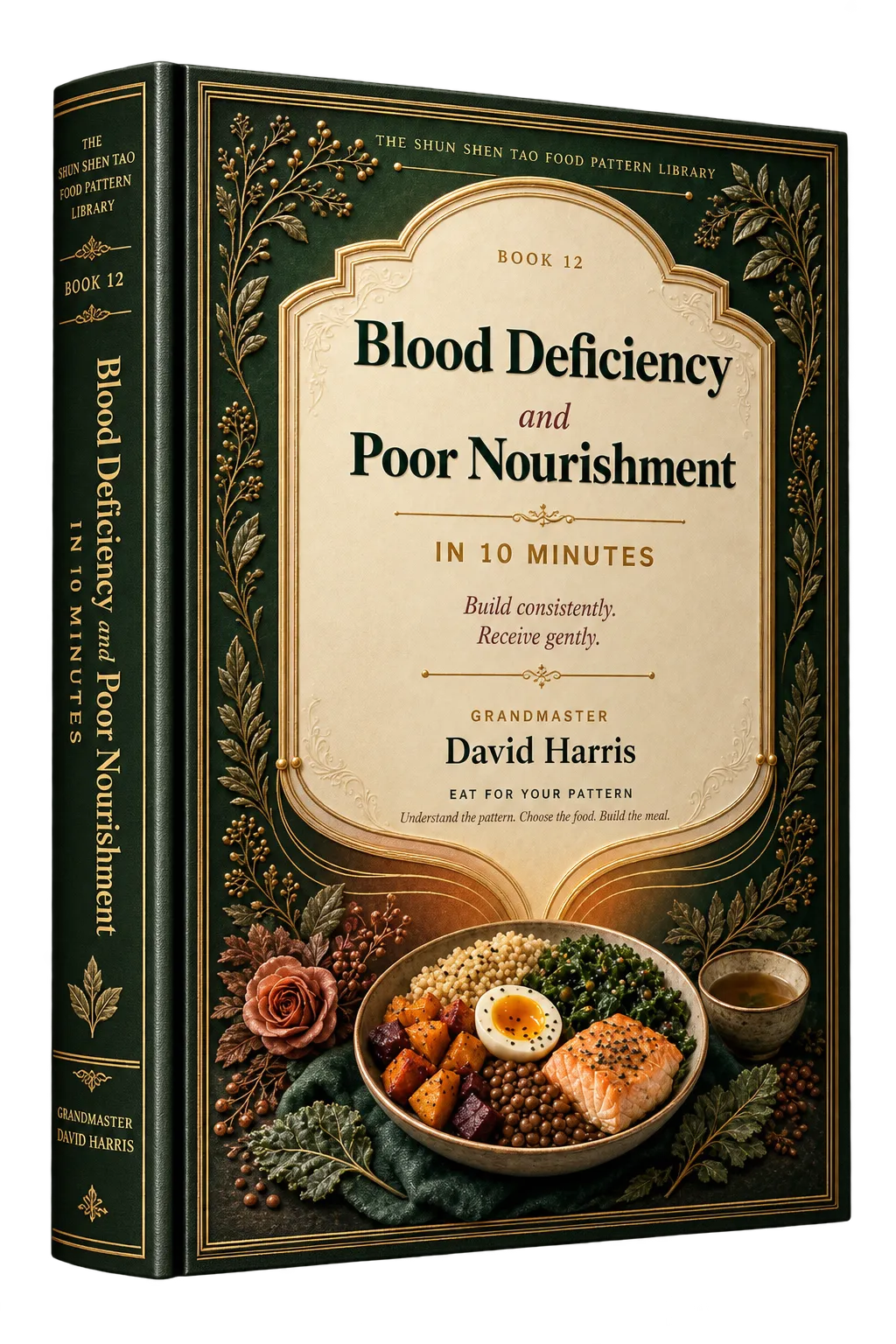
Blood Deficiency and Poor Nourishment in 10 Minutes
Discover a traditional pattern centered on building and nourishment. This guide explores signs such as paleness, dizziness tendency, dryness, poor recovery, and under-nourishment while emphasizing complete, digestible, repeatable meals that build consistently without becoming excessively rich, heavy, or difficult to receive.
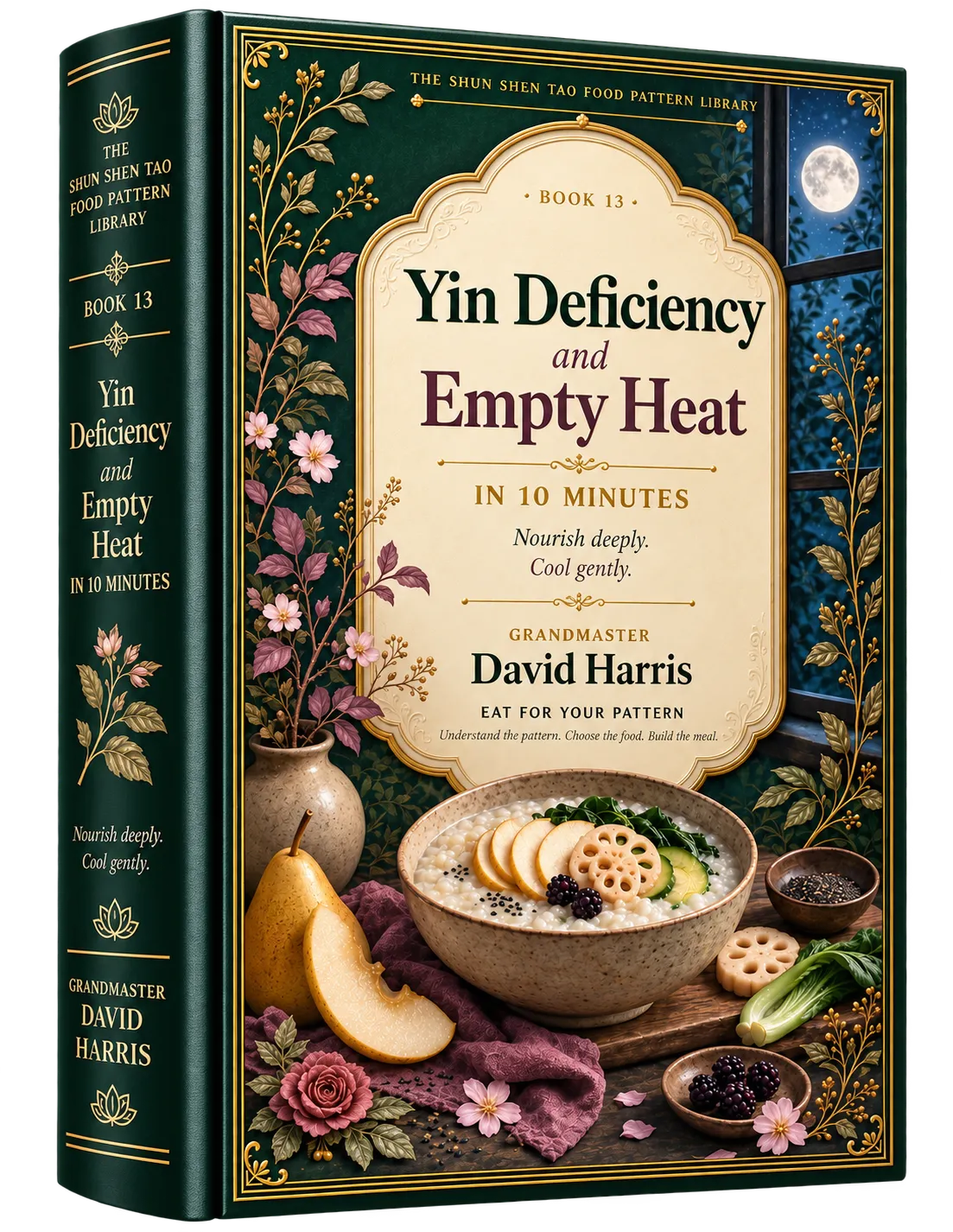
Yin Deficiency and Empty Heat in 10 Minutes
Explore a depleted pattern where dryness appears alongside night warmth, restlessness, or reduced cooling reserve. This guide focuses on moist, nourishing meals and gentle cooling while helping readers distinguish Yin Deficiency and Empty Heat from stronger Excess Heat and other patterns that can produce similar signs.
Blood Stasis and Restricted Circulation in 10 Minutes
Learn about a traditional pattern characterized by fixed, persistent, localized, dark, or sharply restricted presentations. This guide explores food planning for restricted movement while helping readers recognize when Blood Stasis is the primary direction and when another pattern should instead guide the overall meal strategy.
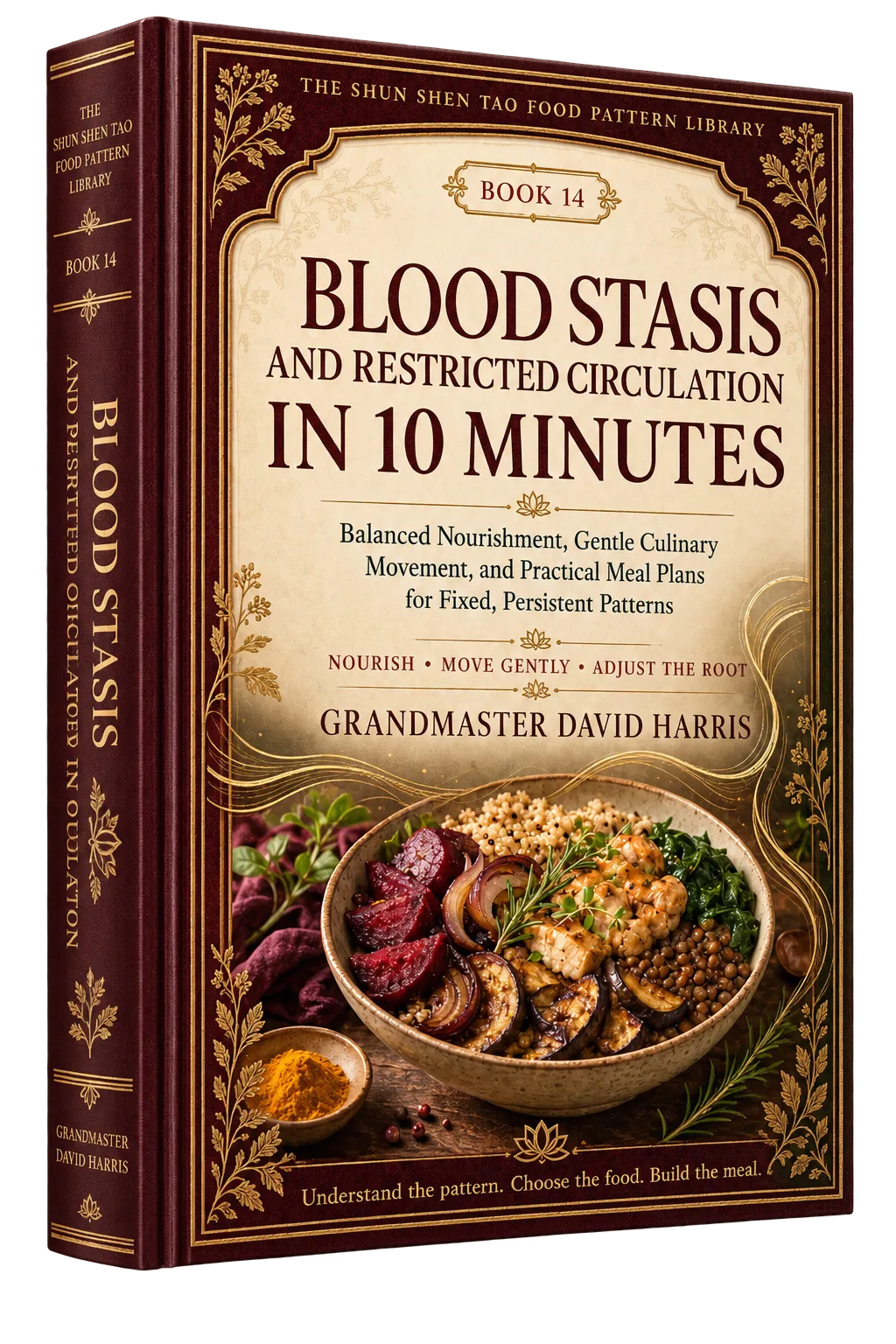
Blood Stasis and Restricted Circulation in 10 Minutes
Learn about a traditional pattern characterized by fixed, persistent, localized, dark, or sharply restricted presentations. This guide explores food planning for restricted movement while helping readers recognize when Blood Stasis is the primary direction and when another pattern should instead guide the overall meal strategy.
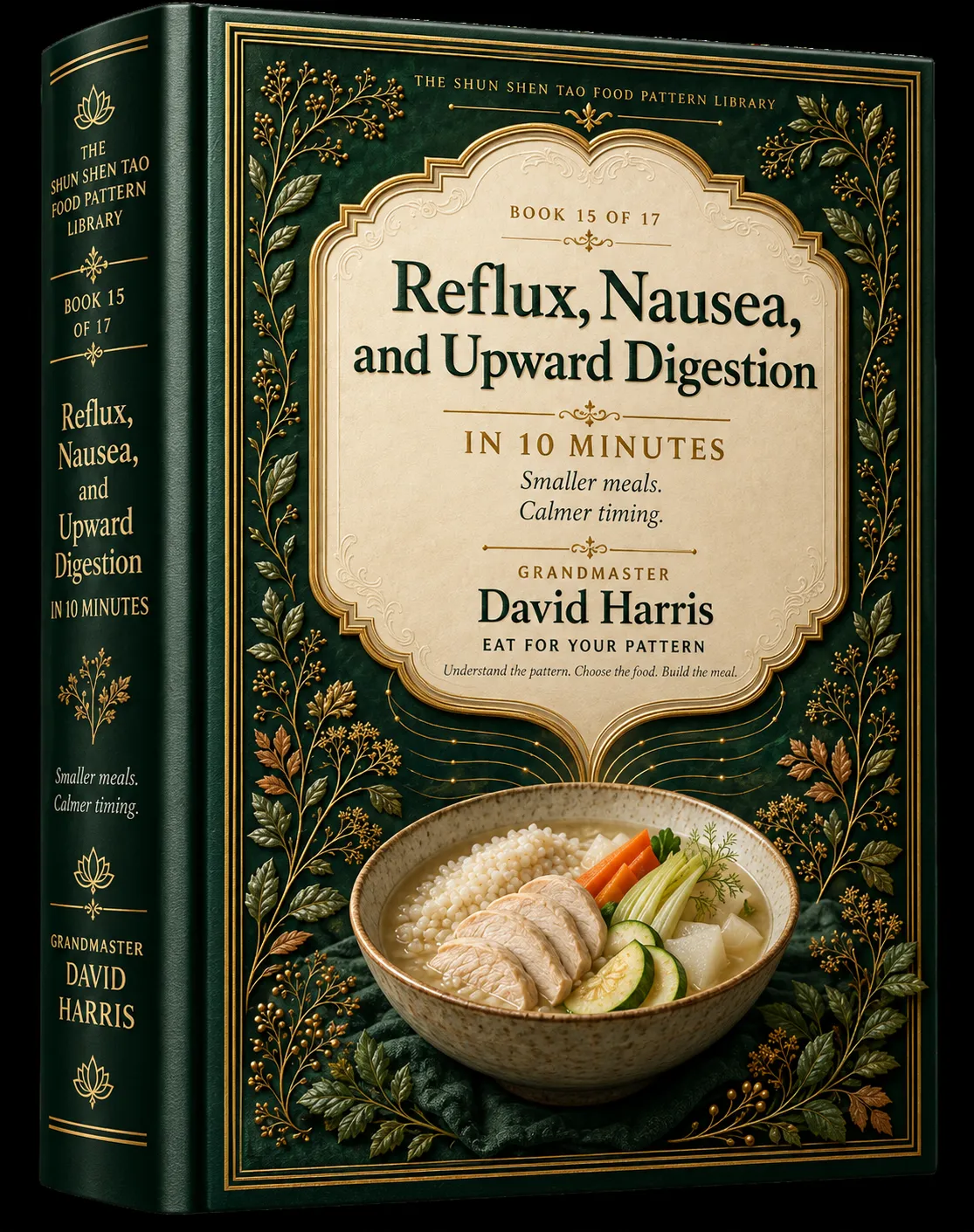
Reflux, Nausea, and Upward Digestion in 10 Minutes
Explore a pattern where digestion repeatedly moves upward, appearing as reflux, nausea, hiccups, regurgitation, belching, or upward pressure. This guide examines meal size, timing, preparation, and the underlying food pattern while introducing smaller, simpler meals as a practical starting point for settling the digestive direction.
Seasonal and External Food Patterns in 10 Minutes
Discover how food choices can temporarily adapt to recent weather-linked and seasonal changes that differ from your normal baseline. This guide explores short-term food adjustments while helping readers distinguish temporary external patterns from chronic internal patterns and know when to return to their usual food direction.
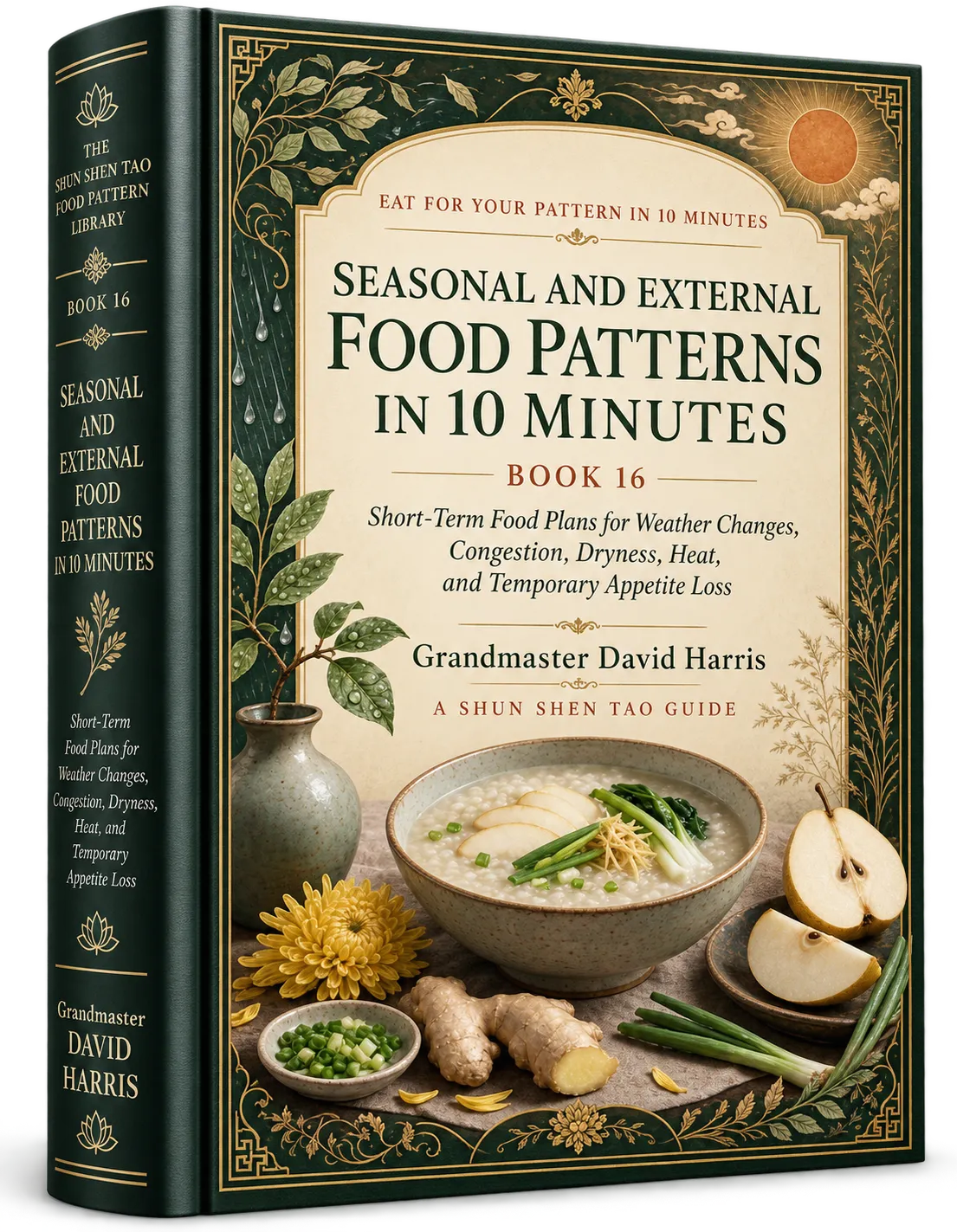
Seasonal and External Food Patterns in 10 Minutes
Discover how food choices can temporarily adapt to recent weather-linked and seasonal changes that differ from your normal baseline. This guide explores short-term food adjustments while helping readers distinguish temporary external patterns from chronic internal patterns and know when to return to their usual food direction.
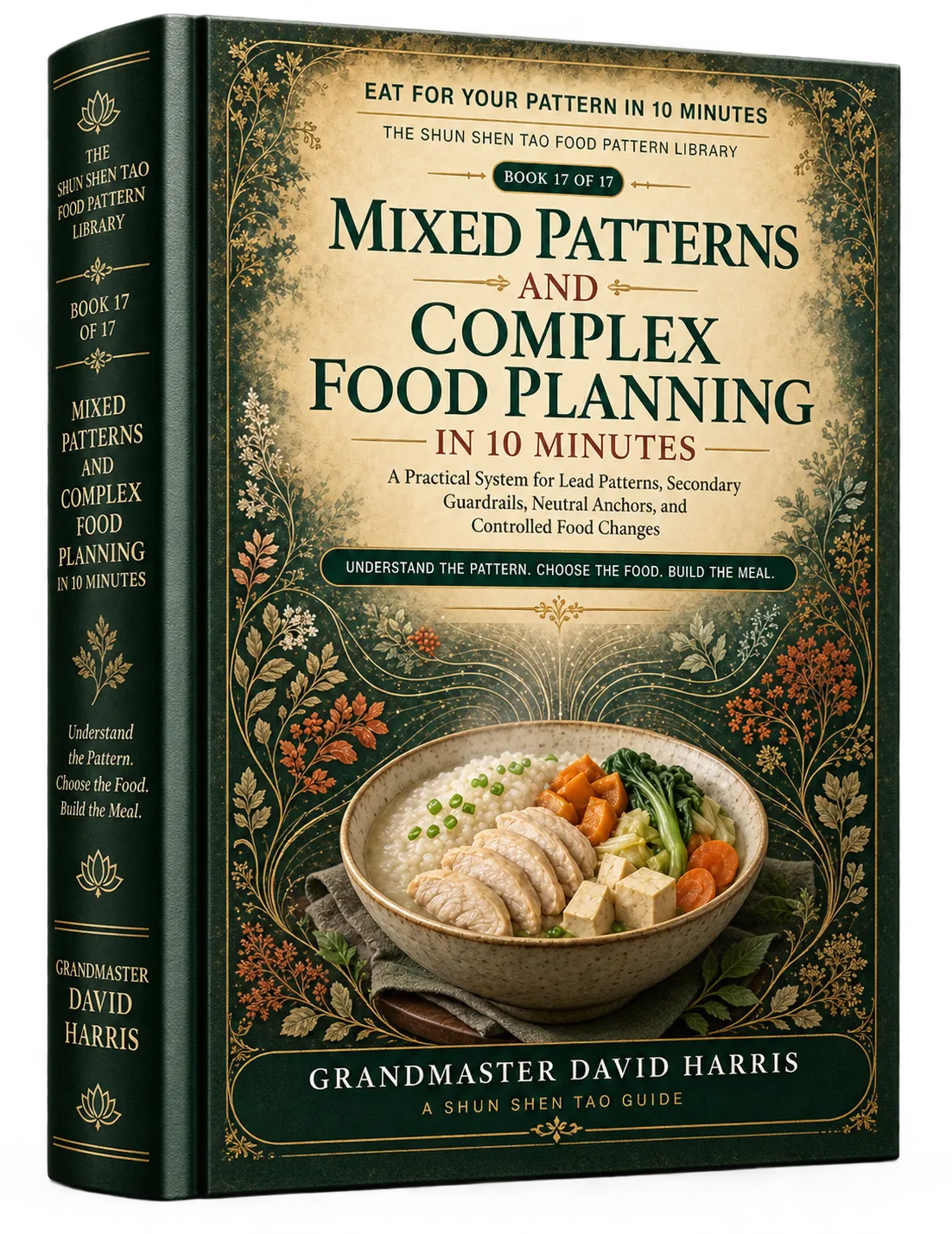
Mixed Patterns and Complex Food Planning in 10 Minutes
Explore what to do when two or more food patterns remain strong or their recommended directions appear to conflict. This guide helps readers identify a primary pattern, choose an appropriate secondary modifier, use neutral meal foundations, and make controlled adjustments rather than trying to follow several competing food strategies at once.
Find Your Food Pattern in 10 Minutes
Discover a practical starting point for understanding your individual food pattern. Find Your Food Pattern in 10 Minutes helps you compare key signs, food responses, temperature tendencies, digestion, energy, and other clues so you can identify your primary pattern and choose the most appropriate direction within the Shun Shen Tao Food Pattern Library.
Cold and Weak Digestion in 10 Minutes
Explore a traditional food pattern centered on cold or raw food sensitivity, digestive chill, bloating, loose stool, fatigue, and a preference for warmth. This guide helps readers understand when warm, cooked meals and easier-to-digest preparation may provide a more suitable direction for supporting weak or cold digestion.
Cold and Weak Digestion in 10 Minutes
Explore a traditional food pattern centered on cold or raw food sensitivity, digestive chill, bloating, loose stool, fatigue, and a preference for warmth. This guide helps readers understand when warm, cooked meals and easier-to-digest preparation may provide a more suitable direction for supporting weak or cold digestion.
Dampness and Heaviness in 10 Minutes
Learn about the traditional Dampness pattern and its connection with heaviness, puffiness, stickiness, sluggishness, and difficult food transformation. This guide explores how lighter preparation, moderate portions, and reduced richness can help create meals that support movement and nourishment without relying on overly dry or restrictive eating.
Food Stagnation and Overloaded Digestion in 10 Minutes
Discover how meal size, richness, speed, late eating, and meal stacking can contribute to retained fullness, pressure, belching, sourness, and reduced appetite. This guide focuses on reducing digestive burden through simpler combinations, moderate portions, gentler movement, and enough time for comfortable appetite to return.
Food Stagnation and Overloaded Digestion in 10 Minutes
Discover how meal size, richness, speed, late eating, and meal stacking can contribute to retained fullness, pressure, belching, sourness, and reduced appetite. This guide focuses on reducing digestive burden through simpler combinations, moderate portions, gentler movement, and enough time for comfortable appetite to return.
Qi Deficiency and Low Energy in 10 Minutes
Explore a traditional pattern characterized by low digestive capacity, weak appetite, fatigue after meals, soft or loose stools, and slow recovery. This guide focuses on regular, cooked nourishment designed to support digestive strength without overwhelming a system that may already have difficulty receiving and transforming ordinary meals.
Yang Deficiency and Deep Cold in 10 Minutes
Discover a deeper Cold pattern associated with persistent coldness, low vitality, cold limbs, and watery or weak tendencies. This guide explores gradual, sustaining warmth and nourishing cooked meals while showing why stronger stimulation is not necessarily better when the underlying pattern reflects deeper weakness.
Yang Deficiency and Deep Cold in 10 Minutes
Discover a deeper Cold pattern associated with persistent coldness, low vitality, cold limbs, and watery or weak tendencies. This guide explores gradual, sustaining warmth and nourishing cooked meals while showing why stronger stimulation is not necessarily better when the underlying pattern reflects deeper weakness.
Qi Stagnation and Stress Digestion in 10 Minutes
Explore how stress, tension, rushing, and disrupted meal timing can influence appetite and digestion. This guide examines stress-reactive bloating, tightness, belching, irregular appetite, and changing bowel rhythm while introducing regular meals, moderate portions, aromatic foods, and gentle movement as practical food-pattern strategies.
Heat and Stomach Irritation in 10 Minutes
Learn about a traditional digestive Heat pattern associated with burning, thirst, irritation, redness, and other hot digestive signs. This guide explores how food temperature, preparation, richness, spice, and individual response can help readers create a more cooling or non-irritating food direction without making unnecessary dietary extremes.
Heat and Stomach Irritation in 10 Minutes
Learn about a traditional digestive Heat pattern associated with burning, thirst, irritation, redness, and other hot digestive signs. This guide explores how food temperature, preparation, richness, spice, and individual response can help readers create a more cooling or non-irritating food direction without making unnecessary dietary extremes.
Damp-Heat and Digestive Irritation in 10 Minutes
Explore a pattern in which Heat and Dampness appear together, creating a combination of heaviness, stickiness, grease, irritation, urgency, or odor. This guide focuses on lighter, cooked, cool-neutral meals with controlled richness while helping readers balance the need to calm Heat without creating excessive Cold.
Phlegm and Congestion in 10 Minutes
Discover the traditional Phlegm pattern, where Dampness becomes more condensed and obstructive. This guide explores mucus, thick congestion, chest fullness, heaviness, and cloudy or obstructed sensations while helping readers reconsider cloying foods and build meals around a clearer, lighter food direction suited to the underlying pattern.
Phlegm and Congestion in 10 Minutes
Discover the traditional Phlegm pattern, where Dampness becomes more condensed and obstructive. This guide explores mucus, thick congestion, chest fullness, heaviness, and cloudy or obstructed sensations while helping readers reconsider cloying foods and build meals around a clearer, lighter food direction suited to the underlying pattern.
Dryness and Fluid Depletion in 10 Minutes
Explore a food pattern centered on insufficient moisture and fluids, including dry mouth, throat, skin, or stools. This guide introduces moist cooking methods and practical meal adjustments designed to protect fluids and nourishment while helping readers distinguish straightforward Dryness from other depleted patterns that may require a different food direction.
Blood Deficiency and Poor Nourishment in 10 Minutes
Discover a traditional pattern centered on building and nourishment. This guide explores signs such as paleness, dizziness tendency, dryness, poor recovery, and under-nourishment while emphasizing complete, digestible, repeatable meals that build consistently without becoming excessively rich, heavy, or difficult to receive.
Blood Deficiency and Poor Nourishment in 10 Minutes
Discover a traditional pattern centered on building and nourishment. This guide explores signs such as paleness, dizziness tendency, dryness, poor recovery, and under-nourishment while emphasizing complete, digestible, repeatable meals that build consistently without becoming excessively rich, heavy, or difficult to receive.
Yin Deficiency and Empty Heat in 10 Minutes
Explore a depleted pattern where dryness appears alongside night warmth, restlessness, or reduced cooling reserve. This guide focuses on moist, nourishing meals and gentle cooling while helping readers distinguish Yin Deficiency and Empty Heat from stronger Excess Heat and other patterns that can produce similar signs.
Blood Stasis and Restricted Circulation in 10 Minutes
Learn about a traditional pattern characterized by fixed, persistent, localized, dark, or sharply restricted presentations. This guide explores food planning for restricted movement while helping readers recognize when Blood Stasis is the primary direction and when another pattern should instead guide the overall meal strategy.
Blood Stasis and Restricted Circulation in 10 Minutes
Learn about a traditional pattern characterized by fixed, persistent, localized, dark, or sharply restricted presentations. This guide explores food planning for restricted movement while helping readers recognize when Blood Stasis is the primary direction and when another pattern should instead guide the overall meal strategy.
Reflux, Nausea, and Upward Digestion in 10 Minutes
Explore a pattern where digestion repeatedly moves upward, appearing as reflux, nausea, hiccups, regurgitation, belching, or upward pressure. This guide examines meal size, timing, preparation, and the underlying food pattern while introducing smaller, simpler meals as a practical starting point for settling the digestive direction.
Seasonal and External Food Patterns in 10 Minutes
Discover how food choices can temporarily adapt to recent weather-linked and seasonal changes that differ from your normal baseline. This guide explores short-term food adjustments while helping readers distinguish temporary external patterns from chronic internal patterns and know when to return to their usual food direction.
Seasonal and External Food Patterns in 10 Minutes
Discover how food choices can temporarily adapt to recent weather-linked and seasonal changes that differ from your normal baseline. This guide explores short-term food adjustments while helping readers distinguish temporary external patterns from chronic internal patterns and know when to return to their usual food direction.
Mixed Patterns and Complex Food Planning in 10 Minutes
Explore what to do when two or more food patterns remain strong or their recommended directions appear to conflict. This guide helps readers identify a primary pattern, choose an appropriate secondary modifier, use neutral meal foundations, and make controlled adjustments rather than trying to follow several competing food strategies at once.