
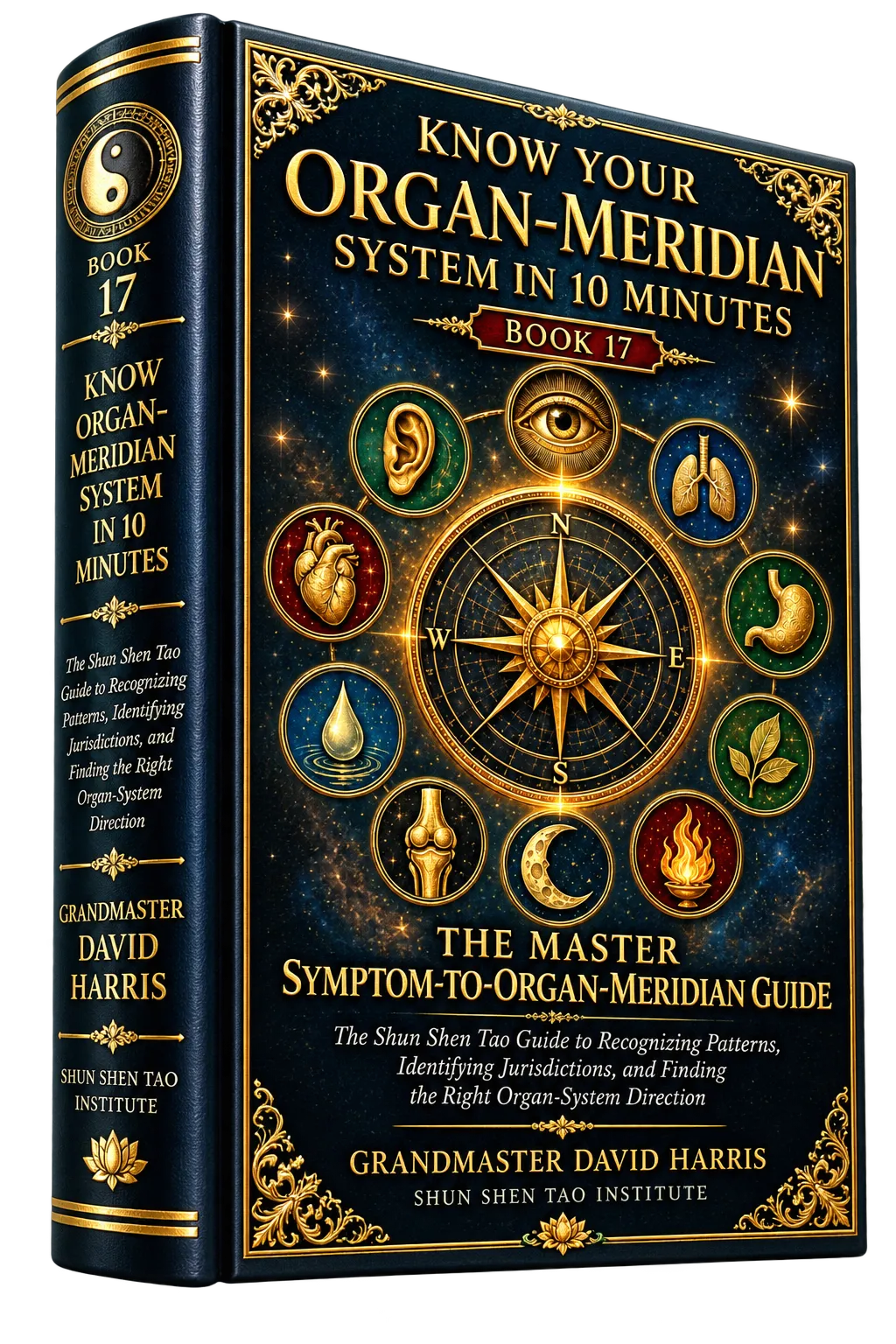
Know your organ-meridian system in 10 minutes
The Master Symptom-to-Organ-Meridian Guide
Start with what you notice. Learn how to move from a symptom, sensation, or recurring pattern toward the organ-meridian jurisdictions that may deserve closer attention.
$9.95

About This Book
A symptom is information—but it does not automatically tell you which system is responsible. The same concern may appear within several different traditional organ-meridian patterns.
The Master Symptom-to-Organ-Meridian Guide brings the entire 17-book series together through a practical symptom-first approach. Instead of beginning with an organ, you begin with what you are actually experiencing.
From fatigue and digestion to sleep, emotions, pain, temperature, fluids, and observable signs, this guide helps you compare possibilities, identify relevant jurisdictions, and look for the additional evidence that strengthens—or weakens—a potential pattern.

About This Book
A symptom is information—but it does not automatically tell you which system is responsible. The same concern may appear within several different traditional organ-meridian patterns.
The Master Symptom-to-Organ-Meridian Guide brings the entire 17-book series together through a practical symptom-first approach. Instead of beginning with an organ, you begin with what you are actually experiencing.
From fatigue and digestion to sleep, emotions, pain, temperature, fluids, and observable signs, this guide helps you compare possibilities, identify relevant jurisdictions, and look for the additional evidence that strengthens—or weakens—a potential pattern.
Inside This Book You'll Discover
How to move from symptoms to possible organ-meridian jurisdictions
A practical method for finding and comparing traditional patterns
Head, face, eyes, ears, nose, and throat relationships
Digestion, appetite, bowels, fluids, and elimination patterns
Pain, muscles, tendons, joints, energy, sleep, and recovery
Emotions, mental activity, Shen, and constitutional reserve
Tongue, voice, complexion, posture, and other observable clues
The Ten-Minute Master Symptom-to-System Assessment
Who This Book Is For
This book is for anyone who wants a practical master reference for navigating symptoms across multiple organ-meridian systems.
Beginners unsure which organ-meridian system to explore
Wellness-minded readers tracking recurring patterns
Martial artists studying whole-body relationships
Bodyworkers and coaches seeking a cross-system reference
Energy-work practitioners comparing traditional jurisdictions
Experienced students wanting a symptom-first navigation guide
Why Readers Love This Book
When several organ systems can share the same symptom, knowing where to begin can be difficult. This guide makes the process clearer by starting with the concern itself and then organizing the evidence around territory, quality, timing, triggers, relief, and companion signs.
Readers learn to rank possible jurisdictions rather than jumping immediately to one conclusion. The method also distinguishes the visible branch from the deeper root and considers paired or multi-system relationships.
The goal is not certainty from one clue. It is a more disciplined way to ask: Which system best explains the whole cluster, and what evidence would change that conclusion?
Product Details
Title: The Master Symptom-to-Organ-Meridian Guide
Author: Grandmaster David Harris
Series: Know Your Organ-Merdian System in 10 Minutes
Book: 17 of 17
Format: Digital eBook (PDF)
Publisher: Shun Shen Tao Institute
Educational Disclaimer
This book is intended for educational and general wellness purposes. Traditional organ-meridian concepts are functional models and are not identical to modern anatomical organs or biomedical diagnoses. The guide supports pattern awareness and organized self-observation; it is not intended to diagnose, treat, cure, or prevent disease or replace medical, mental-health, or other qualified professional care. One symptom does not prove one pattern. Severe, sudden, persistent, worsening, or concerning symptoms should receive appropriate professional evaluation.
Instant Digital Download
Get access to the digital edition and use it as your master symptom reference whenever questions arise. Explore symptoms by body region and function, compare possible jurisdictions, identify companion signs, and use the structured ten-minute assessment to determine which direction deserves deeper study.
Ready to Connect Symptoms to the Bigger Pattern?
Start with what you notice and learn how to compare symptoms, timing, triggers, body regions, observable clues, and system relationships to find the strongest organ-meridian direction.