
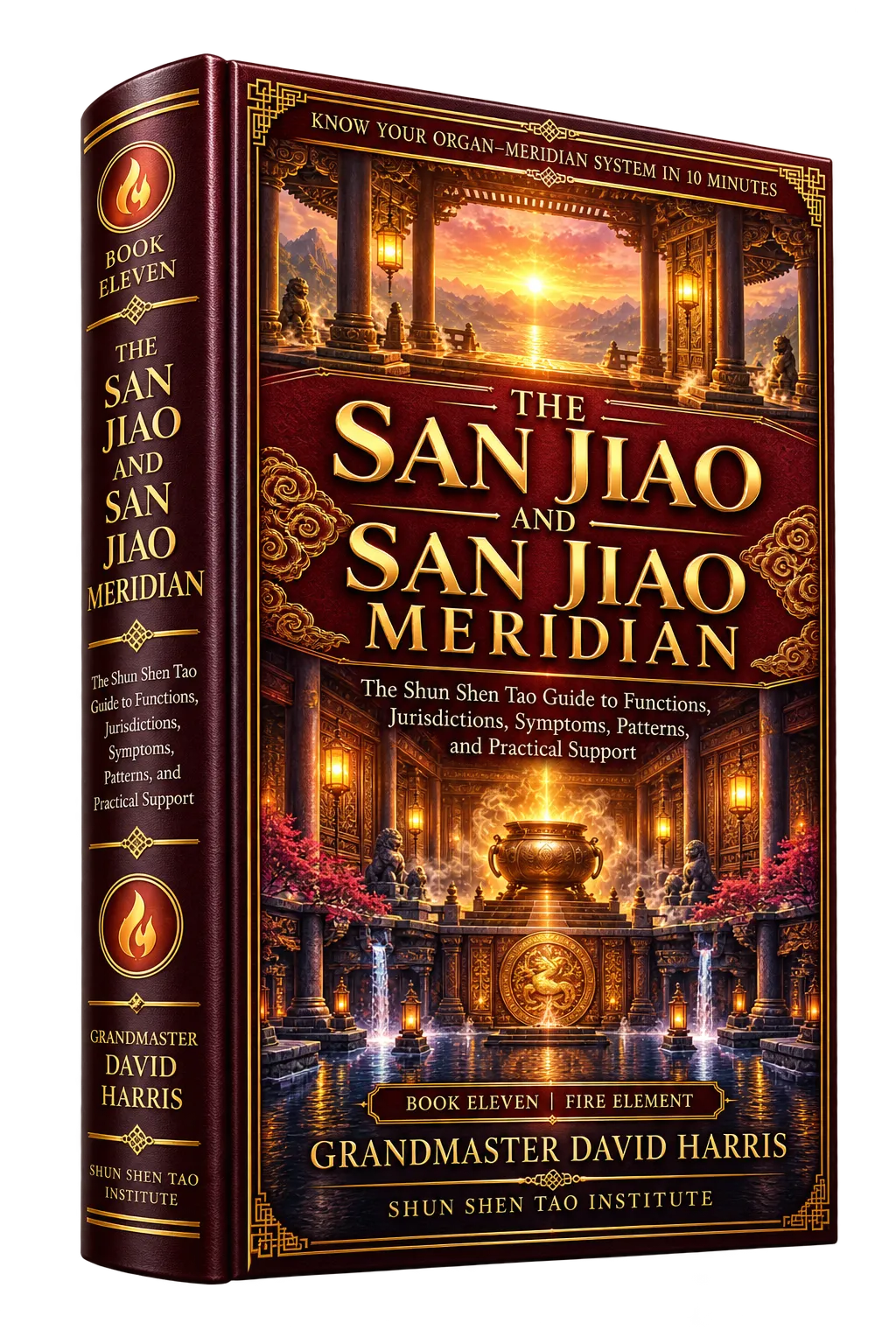
Know your organ-meridian system in 10 minutes
The San Jiao and San Jiao Meridian in 10 Minutes
Discover the San Jiao as the traditional system of coordination and connection. Explore how the Upper, Middle, and Lower Jiao work together to manage warmth, fluids, transformation, communication, adaptation, and release.
$9.95
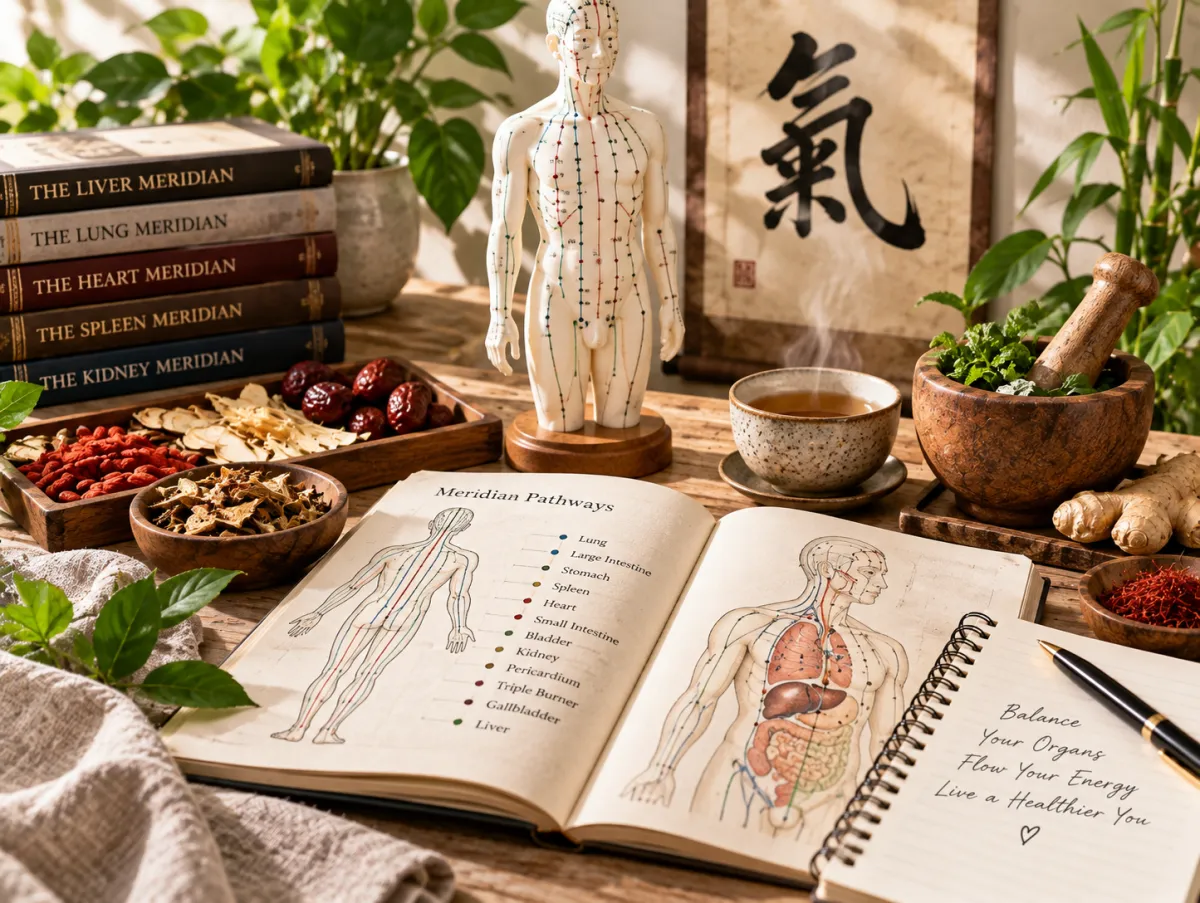
About This Book
The San Jiao—also known as the Triple Burner or Triple Energizer—is unlike a single physical organ. Traditional theory describes it as a functional system coordinating the Upper, Middle, and Lower regions of the body.
The San Jiao and San Jiao Meridian in 10 Minutes explores how breathing, digestion, fluid movement, temperature, elimination, energy, and daily rhythms work together rather than as isolated processes.
Through the Shun Shen Tao concept of jurisdiction, you’ll learn to recognize patterns of communication, transformation, distribution, adaptation, and release—and understand why strength depends not only on available resources, but also on how well those resources are directed.

About This Book
The San Jiao—also known as the Triple Burner or Triple Energizer—is unlike a single physical organ. Traditional theory describes it as a functional system coordinating the Upper, Middle, and Lower regions of the body.
The San Jiao and San Jiao Meridian in 10 Minutes explores how breathing, digestion, fluid movement, temperature, elimination, energy, and daily rhythms work together rather than as isolated processes.
Through the Shun Shen Tao concept of jurisdiction, you’ll learn to recognize patterns of communication, transformation, distribution, adaptation, and release—and understand why strength depends not only on available resources, but also on how well those resources are directed.
Inside This Book You'll Discover
The traditional functions and jurisdiction of the San Jiao
How the Upper, Middle, and Lower Jiao work together
The Hand Shaoyang San Jiao Meridian and its relationships
Fluid movement, warmth, transformation, and Original Qi
The San Jiao and Pericardium Yin-Yang partnership
Ministerial Fire, climate, and environmental influences
Deficiency, congestion, Heat, Cold, Dampness, and Dryness patterns
Practical assessment, daily support, and coordination principles
Who This Book Is For
This book is for anyone who wants to understand how traditional organ-meridian theory connects different regions and processes into one coordinated whole.
Beginners exploring organ-meridian theory
Wellness-minded readers developing body awareness
Martial artists studying interconnected body systems
Bodyworkers and coaches seeking a practical reference
Energy-work practitioners exploring traditional patterns
Experienced students wanting a focused refresher
Why Readers Love This Book
San Jiao theory can initially seem complex because it does not describe one simple anatomical structure. This book makes the concept easier to understand by organizing it around three regions and their relationships.
Grandmaster David Harris explains how the Upper Jiao receives and distributes, the Middle Jiao transforms and transports, and the Lower Jiao separates and releases—all while remaining connected through timing, communication, and movement.
Rather than chasing individual symptoms, readers learn to observe clusters, transitions, direction, and recovery. The result is a practical framework for understanding how separate activities can function as one coordinated system.
Product Details
Title: The San Jiao and San Jiao Meridian in 10 Minutes
Author: Grandmaster David Harris
Series: Know Your Organ-Merdian System in 10 Minutes
Book: 11 of 17
Format: Digital eBook (PDF)
Publisher: Shun Shen Tao Institute
Educational Disclaimer
This book presents traditional organ-meridian concepts and Shun Shen Tao Theory for educational and wellness purposes. It is designed to support pattern awareness, self-observation, and informed personal practice and is not a substitute for individualized professional care. Traditional San Jiao concepts describe a functional system of relationships rather than a single anatomical organ. Individual symptoms should not be treated as proof of a San Jiao pattern. New, concerning, rapidly changing, or persistent symptoms should receive appropriate professional evaluation.
Instant Digital Download
Get access to the digital edition and explore the San Jiao system at your own pace. Learn about the three Jiao regions, fluid and temperature coordination, functional passages, Ministerial Fire, Pericardium partnership, pattern clues, daily rhythms, and practical support principles whenever you want to revisit the material.
Ready to Explore the San Jiao Organ-Meridian System?
Discover how the Upper, Middle, and Lower Jiao connect through transformation, distribution, communication, adaptation, and release—and why coordinated strength gives the whole system greater resilience.